Choosing a Clinical Evaluation Consultant: What Most Get Wrong

I have reviewed clinical evaluation reports where the consultant clearly did not understand the device technology. The manufacturer paid for expertise they did not receive. The Notified Body identified gaps that should never have been there. This happens more often than it should.
In This Article
The decision to work with a clinical evaluation consultant is not about outsourcing a regulatory requirement. It is about securing qualified review and analysis when internal resources cannot provide it. But many manufacturers choose consultants based on the wrong criteria. They look at cost, availability, or credentials without testing whether the consultant actually understands their device class, intended purpose, and clinical context.
The result is predictable. The clinical evaluation report reads like a template. The literature review is generic. The equivalence claim is weak. And when the Notified Body pushes back, the manufacturer realizes they paid for surface compliance, not real clinical evaluation.
Why This Decision Matters More Than You Think
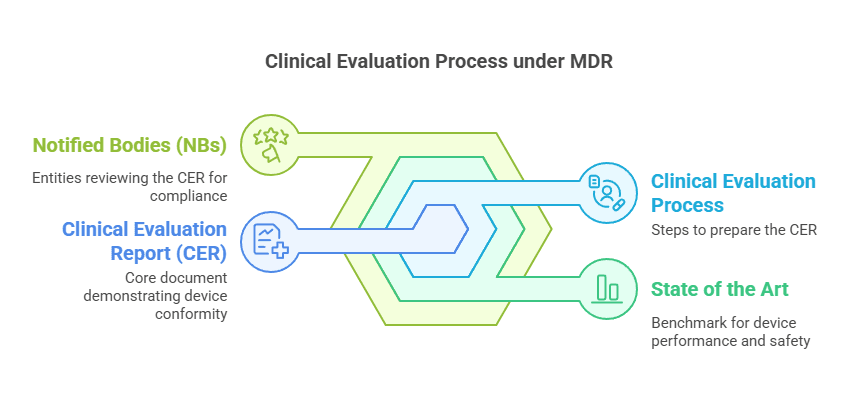
Under MDR 2017/745, clinical evaluation is not a checkbox. Article 61 establishes clinical evaluation as a continuous process. Annex XIV defines what must be included in the clinical evaluation report. MDCG 2020-6 and MDCG 2020-13 clarify what the Notified Body expects to see in terms of depth, reasoning, and clinical evidence.
The clinical evaluation report is the foundation of your technical documentation. It justifies safety and performance. It supports your risk management. It informs your instructions for use and labeling. It drives your PMCF plan. If this foundation is weak, everything built on it becomes fragile.
A consultant who does not understand your device cannot produce a robust clinical evaluation. They can produce a document. But that document will not survive scrutiny.
Manufacturers select consultants based on cost and turnaround time without verifying their understanding of the device technology, clinical application, or relevant clinical data. The result is a generic report that does not withstand Notified Body review.
What to Look for in a Clinical Evaluation Consultant
The most important factor is not the consultant’s CV. It is their demonstrated ability to understand your device and its clinical context. This requires more than regulatory knowledge. It requires clinical reasoning and experience with the relevant medical field.
Medical and Clinical Background
Clinical evaluation is clinical work. It requires a clinician who can assess clinical data, interpret study results, and understand how devices perform in real clinical use. A consultant with a medical degree but no relevant clinical experience will struggle. A consultant with regulatory training but no medical background will produce procedural reports without clinical depth.
Ask whether the consultant has worked with your device class before. Ask whether they understand the clinical setting where your device is used. If your device is used in interventional cardiology, a consultant with orthopedic experience will not bring relevant insight. If your device is a diagnostic tool, you need someone who understands diagnostic pathways and clinical decision-making.
MDR and MDCG Expertise
The consultant must know the MDR requirements and the MDCG guidance documents inside out. This is not about memorizing regulations. It is about understanding what the Notified Body will look for and why certain arguments fail.
MDCG 2020-5 on equivalence is a good test. Ask the consultant to explain what constitutes sufficient demonstration of equivalence under MDR. If they give you a vague answer about similarity, they do not understand the guidance. If they explain the clinical, technical, and biological characteristics required and the level of detail expected in the comparison, they know the material.
MDCG 2020-13 on clinical evaluation is another benchmark. Ask how they approach state of the art review. If they talk about searching PubMed, they are surface-level. If they describe analyzing benchmark devices, guideline recommendations, expert consensus, and performance expectations in the field, they understand what SOTA analysis requires.
A strong consultant does not just produce a document. They explain the reasoning behind every conclusion and prepare you for the Notified Body’s questions before they are asked.
Experience with Notified Body Reviews
Theory and practice are not the same. A consultant who has never been through a Notified Body audit will not anticipate what questions will be raised. They will not know which arguments work and which do not. They will not recognize weak points in the analysis that will become deficiencies.
Ask the consultant about their experience with Notified Body reviews. Ask how many clinical evaluation reports they have defended during audits. Ask what the most common pushback has been and how they addressed it.
If they cannot answer this clearly, they have not been in the room where the decisions are made. They have written reports, but they have not had to justify them under scrutiny.
Transparency About Scope and Limitations
A good consultant will tell you what they can do and what they cannot. If your device has no clinical data and no valid equivalent device, a good consultant will say that a clinical investigation is needed. They will not produce a report that pretends the evidence is sufficient when it is not.
If your device is novel, a good consultant will explain that the appraisal of available data will be limited and that PMCF must be designed to close the evidence gaps. They will not hide behind vague statements.
This transparency is critical. It means the consultant is focused on compliance, not on making the client happy at any cost.
Red Flags to Watch For
Some warning signs are easy to spot if you know what to look for.
Generic Templates and Reused Sections
If the consultant shows you sample reports that look identical across different device types, that is a problem. Clinical evaluation reports must be device-specific. The clinical data appraised, the SOTA analysis, the risk-benefit assessment, and the conclusions must reflect the actual device and its intended use.
Templates have a place for structure. But the content cannot be copied from one device to another. If it is, the report will fail under review.
Overconfidence About Timelines
A consultant who promises a complete clinical evaluation report in two weeks without understanding your device or your data is selling speed, not quality. Clinical evaluation takes time. Literature review takes time. Appraisal takes time. Writing clear reasoning takes time.
Fast delivery is possible when the data is already organized, the device is straightforward, and the consultant knows the field well. But the timeline should follow the scope of work, not the other way around.
No Questions About Your Clinical Data
If a consultant agrees to produce a clinical evaluation report without asking detailed questions about your device, your clinical data, your risk analysis, and your intended claims, they are not doing real evaluation. They are producing a document based on assumptions.
A serious consultant will ask for your technical file, your risk management file, your literature search strategy, and your previous clinical evaluation reports if they exist. They will want to understand what data you have and what gaps remain. They will ask how you plan to address those gaps.
Without this inquiry, the report will be superficial.
Consultants who do not ask detailed questions about the device, the clinical data, and the risk profile before starting work produce reports that do not reflect the actual device or its clinical context.
How to Test a Consultant Before You Commit
The best way to evaluate a consultant is to give them a real task before signing a full contract.
Provide them with a summary of your device and a small sample of your clinical data. Ask them to produce a brief appraisal of one study or a preliminary SOTA search strategy. This will show you how they think, how they structure their reasoning, and whether they understand the clinical and regulatory context.
If the output is clear, detailed, and aligned with MDCG guidance, you have found someone capable. If it is vague, generic, or filled with unsupported statements, you have saved yourself from a larger mistake.
This approach also tests communication. You will see how they respond to feedback, how they explain their choices, and whether they can adjust based on your needs.
What the Relationship Should Look Like
Working with a clinical evaluation consultant is not transactional. It is collaborative. The consultant brings clinical and regulatory expertise. You bring knowledge of your device, your market, and your development history. Together, you build a clinical evaluation that reflects reality and meets regulatory expectations.
The consultant should explain every section of the report. They should justify every conclusion. They should flag weak points and propose solutions. They should prepare you for the Notified Body review and help you respond to questions.
This is not about hiring someone to write a document and disappear. It is about securing an expert partner who strengthens your submission and your understanding of your own clinical evidence.
The right consultant does not just deliver a report. They make you more confident in your clinical evaluation and better prepared for regulatory review.
When to Avoid External Consultants
Not every situation requires an external consultant. If you have qualified internal resources with clinical and regulatory expertise, you may not need external support. If your device is a simple modification of an existing device and your team has handled clinical evaluation before, internal work may be sufficient.
External consultants are valuable when you lack internal clinical expertise, when your device is complex or novel, when you are facing a difficult Notified Body review, or when you need an independent perspective to validate your analysis.
The decision should be based on capability, not convenience. Do not outsource clinical evaluation just to save time. Outsource it when it adds real expertise that you cannot access internally.
Final Thoughts
Choosing a clinical evaluation consultant is a strategic decision. It affects the strength of your clinical evaluation report, your readiness for Notified Body review, and your ability to defend your safety and performance claims.
The wrong consultant will produce a document that looks compliant but does not withstand scrutiny. The right consultant will strengthen your submission, clarify your clinical evidence, and prepare you for the questions that matter.
Do not choose based on cost alone. Do not choose based on credentials alone. Choose based on demonstrated understanding of your device, your clinical data, and the regulatory expectations you must meet.
And test them before you commit. A small pilot task will reveal more than any CV ever could.
Peace,
Hatem
Clinical Evaluation Expert for Medical Devices
Follow me for more insights and practical advice.
Need Expert Help with Your Clinical Evaluation?
Get personalized guidance on MDR compliance, CER writing, and Notified Body preparation.
✌
Peace, Hatem
Your Clinical Evaluation Partner
Follow me for more insights and practical advice.
– MDR 2017/745 Article 61 and Annex XIV
– MDCG 2020-5 on Clinical Evaluation – Equivalence
– MDCG 2020-6 on Sufficient Clinical Evidence
– MDCG 2020-13 on Clinical Evaluation Assessment Report