Class I PMCF: Why exemption does not mean absence

A manufacturer recently told me their class I non-sterile device doesn’t need PMCF because it’s exempt from clinical investigation requirements. The Notified Body disagreed. The submission stalled. This misunderstanding is more common than it should be, and it stems from confusing exemption from prior clinical investigation with exemption from ongoing clinical evidence gathering.
In This Article
The confusion is understandable. MDR Article 61 states that class I devices may be exempted from the requirement to conduct clinical investigations under certain conditions. Manufacturers read this and assume it extends to post-market clinical follow-up. It does not.
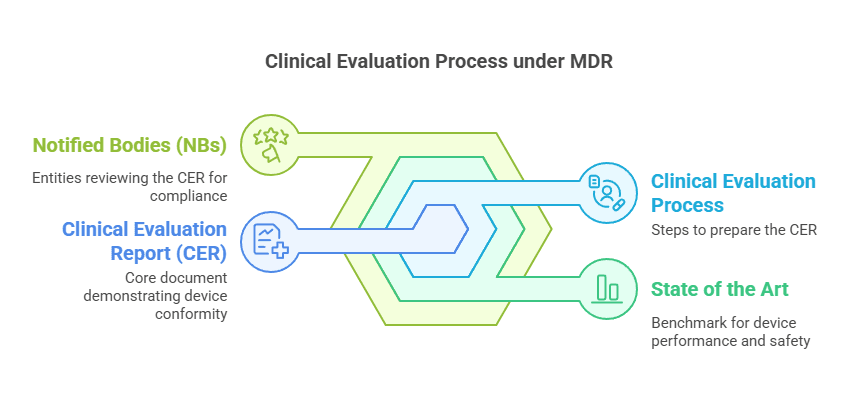
What they miss is that clinical evaluation is a continuous process. The MDR does not distinguish between device classes when it comes to the obligation to generate, collect, and analyze clinical data throughout the device lifecycle. PMCF is not a class IIa and above requirement. It is a clinical evaluation requirement that applies to all devices placed on the market.
Where the Exemption Actually Applies
Article 61 deals with pre-market clinical investigations. For certain class I devices, particularly those with established equivalence to devices already on the market and with sufficient clinical evidence, the requirement to perform a new clinical investigation may be waived. The device can enter the market based on existing clinical data, literature, and equivalence demonstration.
This exemption is limited in scope. It addresses what you must do before the device is marketed. It says nothing about what happens after.
Once the device is on the market, the clinical evaluation continues. The manufacturer must monitor real-world performance, confirm safety and performance claims, identify emerging risks, and update the clinical evaluation report accordingly. This is PMCF. And no exemption from pre-market clinical investigation removes this obligation.
Many class I manufacturers submit technical documentation without a PMCF plan or with only a symbolic placeholder. When challenged, they cite Article 61. The issue is not that they failed to perform a clinical trial. The issue is that they failed to demonstrate how they will gather ongoing clinical evidence.
What PMCG 2020-7 Says About This
MDCG 2020-7 provides detailed guidance on post-market clinical follow-up. The document does not carve out class I devices. Instead, it explains that PMCF is part of the clinical evaluation process, which applies to all medical devices regardless of classification.
The guidance makes clear that PMCF is not optional. It is a structured method for proactively collecting and evaluating clinical data from devices already placed on the market. The scope and depth of PMCF activities must be proportionate to the risk class and the specific characteristics of the device, but proportionality does not mean absence.
For a class I device, PMCF may be less intensive than for a class III implantable. But it must exist. It must be planned. And it must generate usable evidence.
What Proportionate PMCF Looks Like for Class I
Proportionality is the key concept. A class I non-sterile, non-measuring device with decades of safe use and low inherent risk does not need the same PMCF infrastructure as a class IIb active therapeutic device. But it still needs something.
A proportionate PMCF plan for such a device might include:
Systematic collection of complaint data with root cause analysis and trending. Regular review of device returns and field performance. Literature surveillance to identify new safety signals or performance concerns. Periodic clinical evaluation report updates that integrate this data and confirm ongoing acceptability of the benefit-risk profile.
This is not burdensome. It is structured vigilance. It demonstrates that the manufacturer is not assuming safety based on past performance but actively verifying it.
Reviewers do not expect class I manufacturers to run registries or conduct observational studies. They expect evidence that the manufacturer is paying attention. A PMCF plan that says
Frequently Asked Questions
What is a Clinical Evaluation Report (CER)?
A CER is a mandatory document under MDR 2017/745 that demonstrates the safety and performance of a medical device through systematic analysis of clinical data. It must be updated throughout the device lifecycle based on PMCF findings.
How often should the CER be updated?
The CER should be updated whenever significant new clinical data becomes available, after PMCF activities, when there are changes to the device or intended purpose, and at minimum during annual reviews as part of post-market surveillance.
What causes CER rejection by Notified Bodies?
Common reasons include inadequate equivalence demonstration, insufficient clinical data for claims, poorly structured SOTA analysis, missing gap analysis, and lack of clear benefit-risk determination. Structure and logical flow are as important as the data itself.
Which MDCG guidance documents are most relevant for clinical evaluation?
Key documents include MDCG 2020-5 (Equivalence), MDCG 2020-6 (Sufficient Clinical Evidence), MDCG 2020-13 (CEAR Template), MDCG 2020-7 (PMCF Plan), and MDCG 2020-8 (PMCF Evaluation Report). MDCG 2020-7, MDR Article 61
Need Expert Help with Your Clinical Evaluation?
Get personalized guidance on MDR compliance, CER writing, and Notified Body preparation.
✌
Peace, Hatem
Your Clinical Evaluation Partner
Follow me for more insights and practical advice.
Related Resources
Read our complete guide to PMCF under EU MDR: PMCF Plan & Report under EU MDR
Or explore Complete Guide to Clinical Evaluation under EU MDR